
Photography Mini Sessions: A Practical Guide for Photographers
Plan, price, schedule, and deliver photography mini sessions without turning them into rushed full sessions.

Mini sessions look simple because the appointment is short. The rest of the job is not. Planning, booking, setup, culling, editing, and delivery still take time, even when the client is in front of the camera for a shorter amount of time.
The format works best as a deliberately limited offer, not as a full session squeezed into a smaller time slot. A clear mini-session package tells clients exactly who it is for, what happens during the appointment, what they will receive, and what it will cost.
What is a photography mini session?
A photography mini session is a short session with a narrow scope and a defined set of finished photographs. It often takes place on a specific date, at a single location, and with a repeatable setup that several clients can use.
Professional Photographers of America recommends 15 to 30 minutes for fall mini sessions. Its examples pair 5 photographs with a 15-minute session and 10 photographs with a 25-minute session. These are useful examples, but they are not universal rules. The right limits depend on your subjects, setup, editing process, and pricing.
The clearest distinction is not simply session length:
| Package element | Mini session | Full session |
|---|---|---|
| Schedule | Fixed date and short time slot | More flexible date and longer appointment |
| Location | Usually one planned setting | May include more space or multiple locations |
| Scope | One focused purpose or setup | More variety, people or concepts |
| Finished photographs | Smaller defined collection | Larger collection or broader choice |
| Pricing | Based on a repeatable, limited offer | Based on a more customized workload |
How to build a mini-session offer
Start with clear limits
Before announcing the date, decide:
- Who the session is for
- The date, location, and appointment length
- How many people or pets may take part
- What setup, theme, or background is included
- How many finished photographs the client will receive
- Whether additional photographs can be purchased
- When and how the gallery will be delivered
- What happens if the client is late, cancels, or needs to reschedule
Put the same information on the booking page, in the confirmation, and in your agreement. Clients should not have to compare several messages to understand what they bought.
Price the complete job
Camera time is only one part of a mini session. Build the price from the complete workload:
- Planning and client communication
- Location, permit or studio costs
- Props, styling and setup
- Payment and booking fees
- Shooting time and schedule buffers
- Culling and editing
- Gallery preparation and delivery
- Taxes and other business overhead
A useful starting formula is:
Allocated shared costs + per-client costs + working time + profit target = minimum required revenue per booking
Shared costs might include the location, set, and marketing for the entire day. Divide those across a realistic number of paid bookings, not the maximum number of slots you hope to sell. Then add the costs and labor attached to each client.
This does not produce a universal market rate. It shows whether your planned price can support the offer you are promising.
Create a simple booking process
Announce the offer only after the package, schedule, and policies are ready. The post or email should show the work, state the essential limits, and lead to one place where the client can choose an available slot and complete the required booking steps.
Decide whether a slot is reserved when someone submits a form or only after payment and agreement acceptance. Say this clearly. If two people ask for the same time, a defined booking rule prevents an awkward decision later.
If the day sells out, a waitlist can help fill cancellations. Collect only the information you need, keep the order clear, and tell people how quickly they must respond when a slot opens. Avoid promising that every person on the list will receive an appointment.
Add breathing room to the schedule
Back-to-back sessions do not have to mean zero buffer. Leave time for check-in, late arrivals, a quick reset, equipment checks, and moving between clients. A delay in the first hour should not affect every appointment that follows.
Your late-arrival policy should also match the schedule. If a client arrives ten minutes late for a 20-minute slot, decide in advance whether the session still ends at the original time. Include that policy before booking so it does not become a negotiation on the day.
Prepare a repeatable shot plan
A short appointment leaves little room for improvising the entire session. Plan a small sequence of must-have photographs, followed by a few reliable variations if time allows.
Decide what you will skip if the client arrives late or a setup takes longer than expected. The goal is not to make every gallery identical. It is to make sure each client receives the core result you promised before you experiment with optional ideas.
Prepare clients before they arrive
Send a booking confirmation, a reminder, and clear session instructions. Before the appointment, the client should know:
- Where to go and where to park
- When to arrive
- How long the session lasts
- Who may participate
- What to wear or bring
- What happens if weather affects the plan
- When to expect the gallery
- Whether they will choose favorites or receive a completed collection
Clear preparation protects the shooting time. It also reduces last-minute questions when you may be working through several appointments in one day.
Plan selection and delivery before the shoot
Mini-session delivery usually follows one of two models. You can select and deliver the included number of finished photographs, or you can send a proofing gallery and ask the client to choose their favorites before final editing or release.
If the client makes the selection, state the number of favorites included, the selection deadline, and the price of additional photographs. Keep high-resolution downloads unavailable during proofing so the preview is not mistaken for the finished delivery.
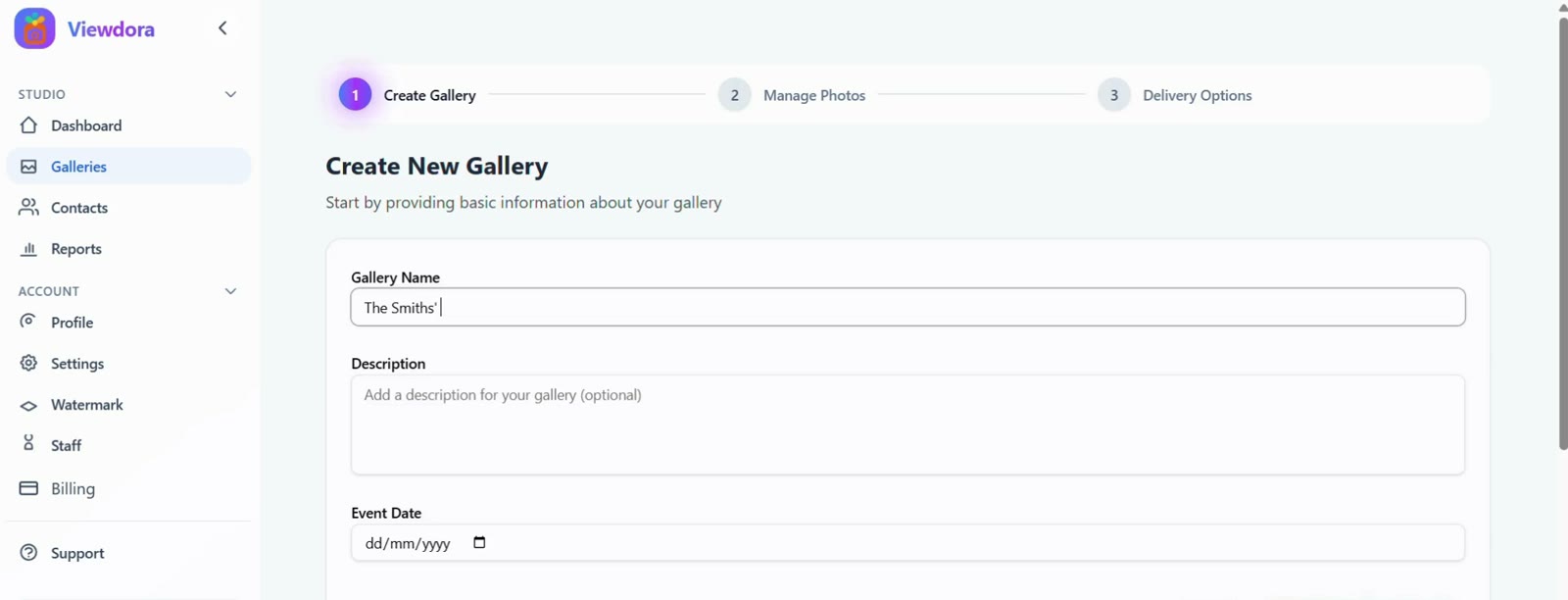
For a day with several clients, create a separate gallery for each booking and use a consistent naming system. You could complete one client’s gallery at a time so photographs do not end up in the wrong delivery. Before sending each link, check the client name, image set, download permissions, and message. Adapt this to your workflow
Your gallery should keep viewing, favoriting, and approved downloads in one clear process. With Viewdora, clients can view and select photographs in a dedicated gallery, while photographers can track gallery activity and decide when high-resolution files are released. Dynamic watermarks can remain on previews until that release.
Review the results after the mini-session day
Once delivery is complete, compare the plan with what actually happened. Record the number of booked slots, total revenue, shared and per-client costs, hours worked, and additional photograph sales. Also note where the schedule slipped and which client questions came up repeatedly.
Profit is what remains after the complete cost of the offer, including the value of your time. A fully booked day can still underperform if editing takes much longer than planned or the package includes too much work. Those details will help you adjust the next date, price, session length or deliverable count.
Frequently asked questions
Q: How long should a photography mini session be?
A: Choose a length that allows you to deliver the promised result consistently and efficiently. Test the shot plan at that pace and add separate buffer time between clients.
Q: How many photographs should a mini session include?
A: Five to 10 finished photographs can be a useful starting point for a short portrait session. Your number should still reflect your shooting style, editing time, price, and client expectations. If clients may buy more, publish the price and process before booking.
Q: Are photography mini sessions profitable?
A: They can be, but a short appointment does not guarantee a profit. Calculate the shared costs, per-client costs, total working time, and expected number of paid bookings. After the event, compare the actual profit with your target instead of judging the offer by revenue alone.
Q: What should happen if a client is late?
A: Use a written policy that protects the rest of the schedule. Many photographers keep the original end time for a late arrival because extending one appointment delays every client after it. Whatever approach you choose, explain it before the client books.
Before you publish the offer
A strong mini session has clear limits, a price based on the full workload, a schedule with room to recover, and a delivery process clients can understand.
Viewdora brings proofing and delivery into one gallery, so clients can view and favorite photographs before you release the final files. Start your 14-day free trial and test the complete mini-session delivery process before your first appointment.
Ready to protect your work?
Start your free trialRelated posts
Introducing the Viewdora Referral & Ambassador Program
Refer photographers to Viewdora. Approved Ambassadors earn a 25% commission for up to 12 months, and referred photographers save 20% for 3 months or 10% for a year.
Read more →
New in Viewdora: Photo Comments, Billing, Gallery Expiration, and More
Explore the latest Viewdora features, including photo comment threads, in-app billing, automatic gallery expiration, improved watermark controls, and a smoother mobile experience.
Read more →
Event Photography Packages: What Photographers Should Include
Build event photography packages that clearly explain coverage, deliverables, pricing, image-use terms, and the final gallery experience.
Read more →